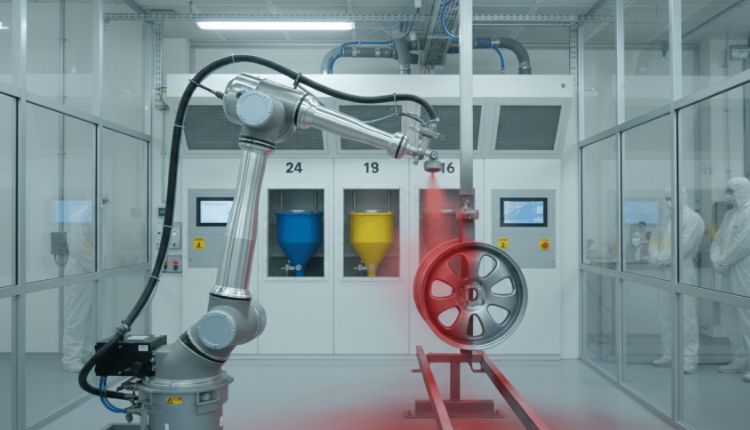
Temperature control plays a bigger role in powder coating systems than many realize, because even small thermal inconsistencies can disrupt the curing process. Operators working with any powder coating equipment package depend on steady, well-managed heat conditions to achieve durable, smooth finishes. Whether the facility uses a compact powder coating machine or large industrial powder coating equipment for sale, thermal stability determines how reliably the coating bonds to the substrate.
Stable Operating Temperatures That Prevent Heat Spikes or Drops
Powder coating relies on maintaining a predictable curing temperature so the powder melts and bonds evenly. Heat spikes can burn the coating or cause inconsistent gloss, while sudden drops may lead to under-cured surfaces. For this reason, all powder coating equipment must hold a tight temperature range during the entire cycle.
Poor temperature stability often comes from worn heating elements, drafty oven doors, or incorrect setpoints. Powder coating systems require sensors and controllers that adjust output in real time to prevent drift. By keeping temperatures steady, operators achieve repeatable finishes batch after batch.
Consistent Airflow Control to Remove Excess Heat or Moisture
Airflow management plays a central role in balancing internal temperatures and removing moisture from the curing chamber. If airflow is uneven, certain areas of the oven may run hotter or cooler, creating patchy or inconsistent curing. Powder coating equipment packages typically include engineered ducting to support uniform heat distribution.
Proper airflow also avoids the buildup of moisture during preheating stages. Some powder coating equipment for sale includes adjustable fans to help control humidity levels, especially in environments prone to condensation. Maintaining consistent airflow ensures the entire surface cures with matching color and hardness.
Proper Insulation to Maintain Internal Temperatures Efficiently
Insulation helps powder coating systems retain heat and operate with greater efficiency. Without adequate insulation, energy loss increases and the heating elements must work harder, leading to premature wear. Thick, heat-resistant panels line the oven walls to keep internal temperatures consistent.
Different types of powder coating equipment require varying insulation levels based on size, workload, and operational frequency. A well-insulated chamber also minimizes heat transfer to surrounding areas, improving safety and reducing utility costs. Quality insulation supports both thermal performance and long-term equipment durability.
Adequate Ventilation to Avoid Overheating and Protect Operators
Ventilation keeps excess heat and fumes from building up around the machine, especially during long runs. Powder coating machine designs typically include vents or exhaust systems that release heated air safely outside the work zone. This protects nearby equipment from heat exposure and ensures operators remain comfortable. A ventilation system also stabilizes internal pressure, supporting the consistent airflow needed inside curing ovens. If ventilation becomes restricted, temperatures may rise too quickly, leading to uneven curing or potential shutdowns. Proper exhaust pathways preserve both machine performance and workplace safety standards.
Temperature Monitoring Systems for Accurate Process Control
Accurate monitoring tools are essential for verifying that the curing temperature matches the material specification. Many powder coating systems include digital controllers, thermocouples, and real-time displays that track readings throughout the curing process. These systems allow operators to catch fluctuations before they affect product quality. Monitoring also simplifies troubleshooting. If a section repeatedly shows uneven curing, technicians can compare temperature logs to locate specific inconsistencies. Powder coating equipment packages benefit greatly from built-in data tracking that supports consistent and repeatable finishing results.
Safe Heat Dispersion Away from Sensitive Machine Components
Heat dispersion is necessary because certain components—controls, wiring, sensors, and electronics—cannot withstand extreme temperatures. Manufacturers design powder coating equipment with barriers, cooling channels, and separated compartments to protect sensitive parts from heat exposure. Proper dispersion reduces the risk of premature failure.
Unexpected heat pockets often signal that airflow patterns or insulation layers need adjustment. Powder coating equipment for sale commonly includes designs that channel excess heat into designated exhaust areas and away from circuits. Maintaining this balance keeps the machine running reliably over extended use.
Maintained Clearances Around Equipment to Allow Heat Dissipation
Clearances surrounding a powder coating machine affect how easily heat can dissipate. If the equipment sits too close to walls or stored materials, heat can accumulate and affect performance or safety. Operators should follow manufacturer guidelines for spacing to ensure consistent operation. Shops with multiple powder coating systems must also consider airflow between units. Crowded layouts lead to shared heat zones, increasing strain on all equipment nearby. Proper spacing helps extend the life of heating elements and keeps operating temperatures steady.
Regular Inspection of Heating Elements for Safe Performance
Heating elements endure constant high temperatures, so routine inspections are vital. Over time, elements can warp, crack, or lose efficiency, causing uneven heat distribution. Regular checks ensure powder coating equipment maintains consistent performance and prevents unexpected shutdowns.
Inspection also includes verifying wiring, connections, and sensor placement. Powder coating equipment packages perform best when heating components respond quickly to controller adjustments. A well-maintained system supports accurate curing cycles and reduces energy waste.
Effective thermal management brings together insulation, monitoring, airflow, spacing, and equipment maintenance. Reliant Finishing Systems offers powder coating equipment engineered to meet these requirements, helping operators produce reliable, uniform finishes across every coating cycle.
